The day runs from 09.30- 16.50, followed by an evening social. Programme subject to change.
In this scene-setting session, leading researchers in the sector explore whether arts, culture and heritage business models are breaking. If so, what can be done about it?
Eliza Easton will discuss five key challenges stopping business model innovation: financial fragility; capital underinvestment; technological gaps; hybrid value creation; barriers to innovation.
Dr Dawn Langley will talk about the dilemma of reflecting the current operating context and also looking to the future, loosely based on the notion: ‘If we only reflect crisis, we risk paralysis. If we only offer optimism, we risk irrelevance.’
David Reece will be tackling the business model question through the idea of institutional form: ownership, governance, financial structure. Covering a few examples both inside and outside the cultural sector, he will explore how different ownership structures determine whether value is retained or extracted.
Arts Professional’s News Editor Georgia Luckhurst leads an audience Q&A with Baroness Margaret Hodge, author of the independent review into Arts Council England.
This presentation argues that while business thinking has an important role within culture, the dominance of market-based logics risks narrowing how cultural value is understood and experienced. The presentation critiques the shift from culture as a public good toward culture as an ‘asset’, questioning models that prioritise individual organisational performance over wider social and civic contribution. In response, it proposes a more interdependent and regenerative model for cultural practice and leadership. Drawing on ideas of cultural vitality, collaborative ecologies, ethical evaluation, and collective impact, and it advocates for approaches rooted in cooperation and shared learning.
This session brings together conversation-starters from a panel of experts alongside your own knowledge and experiences. Come ready to put questions to the panel, talk with one another, and share your thoughts, experiences and ideas with the room.
More from Nat Edwards:
“In 1996, the Royal Armouries moved its HQ from its centuries-old home in London to Leeds, in part thanks to a ground-breaking early private finance deal. 30 years on, after a sometimes tortuous journey to resolve the unintended commercial consequences of innovation, the Armouries is finding new ways to lever income from its placemaking potential – and helping to transform Leeds along with it.”
More from Carolyn Ehman:
“Are our venue hire models actually doing what we need them to do? Over the last 6 years the Albany has done a deep dive into optimising our venue hire offer, interrogating margins, exploring new package offers, and articulating measures of success beyond the financial. An ongoing process, this is a snapshot of the questions we’ve asked ourselves, the changes we’ve made, the opportunities we’ve discovered, and the many learnings along the way.”
More from Carol Rayner
“The Mercury Theatre has experienced some commercial successes since a substantial rebuild which opened in 2021. Carol will share her experience of Santa’s Grottos, tours and retail and give top tips on how to monetise your current offer and add an upsell to everything!”
Users of the Baker Richards Advantage Dashboard have an opportunity to join a user group roundtable.
The Dashboard covers sales and audience analysis reporting, strategic trends, audience segmentation, and donor analysis. The team are also happy to provide short demonstrations of the system on the day – please contact Baker Richards if you would like a demonstration.
Invitation / pre-appointment only.
Tarek Iskander and guest host Ruth Hogarth are joined by pollster and journalist Peter Kellner, online hate analyst Fiona Morris, and sector researcher Robin Cantrill-Fenwick to look at the emergence of smaller parties and the potential consequences of the rise of right-wing populism for arts, culture, and heritage organisations.
Look out for an opportunity to submit questions or experiences beforehand.
Followed by a short introduction to the summit sponsors, ahead of lunch.
Freelancers are central to how the creative industries function, yet organisational business models still too often treat them as a flexible cost rather than a core partner in long term resilience. Falling real terms pay, insecure contracts, late payment, uneven access to rights, and growing anxiety about AI continue to shape freelance working lives, alongside debate over the delayed appointment of a freelance champion.
Proposed by organisations helping co-ordinate the new All-Party Parliamentary Group for Freelancers, this panel asks what would need to change if arts organisations genuinely designed their business models around creative freelancers. Bringing together trade union research, political insight, freelance creative practice and producing organisations, the discussion will explore practical changes to planning, commissioning, procurement and risk sharing that could support fairer, more resilient creative industries.
This session brings together conversation-starters from a panel of experts alongside your own knowledge and experiences.
In response to the significant challenges faced by arts and cultural organisations of all scales, 3 panelists present a range of case studies and experiences of rethinking business models, including shared services, combining group buying power, through to full merger. They cover the challenges, realities and lessons learnt from this, while also considering socially or artistically-driven innovations that enhance business effectiveness and income generation.
Come ready to put questions to the panel, talk with one another, and share your thoughts, experiences and ideas with the room.
Two focus groups, back to back.
This session brings together conversation-starters from a panel of experts alongside your own knowledge and experiences. Come ready to put questions to the panel, talk with one another, and share your thoughts, experiences and ideas with the room.
More from Robin Thomas and Jane Beattie:
“What if heritage is not something we conserve, but something we activate? In this session, Robin Thomas of Morgen Thomas Ltd and Jane Beattie of Tricolor explore how philanthropy is shifting away from funding preservation alone and towards investing in projects that create meaningful social change, resilience and long-term community impact.
Using Delapré Abbey’s ‘A Stable Future’ project as a case study, the session examines how heritage organisations can successfully attract philanthropic and grant investment by designing projects around local need, wellbeing and partnership working. From community co-creation and impact measurement to business planning and policy alignment, we argue that fundraising begins not with buildings, but with clearly evidenced outcomes and a compelling social purpose.
The session also reflects on changing donor attitudes, highlighting growing expectations around sustainability and measurable impact. Through a practical decision-making framework, Robin and Jane encourage organisations to think critically about relevance, legacy and why their work matters now. The session highlights that philanthropy should be treated as a collaborative and creative process – one that builds belief, momentum and lasting change, rather than simply funding ‘projects’.”
More from Michael Garvey:
“Grants are vital – but they can’t do everything. This session explores how social impact investment and strategic philanthropy are opening up new possibilities for cultural and creative organisations across the UK from acquiring assets, scaling existing revenue streams, to launching new ventures.
Figurative’s Senior Philanthropy Associate, Michael Garvey, suggest that we need to reframe our approach to cultural sector funding – it’s no longer about subisdy but instead it’s about investment. Using a broad mix of funding sources and expanding our armoury from traditional grants to include philanthropy, social investing and even loan finance we’ll briefly look at what a cultural organisation needs to do to attract the investment and investor that will enable them to thrive.
Whether you’re curious about building your philanthropy case or thinking through what impact investment is – this session delves into how we can collectively work to build a stronger and more resilient sector, one that focuses on using the arts to improve place.”
More from Martin Prendergast:
“If we’re serious about resilience, we need to stop treating philanthropy and sponsorship as marginal and start designing policy around them – a UK Aillagon-style framework could unlock corporate giving at scale, while partnerships and naming rights can operate as long-term infrastructure, not one-off deals. The real shift is cultural as much as fiscal: moving from subsidy plus fundraising, to a genuinely mixed economy where culture and corporates collaborate by design.”
Users of the Baker Richards Advantage Dashboard have an opportunity to join a user group roundtable.
The Dashboard covers sales and audience analysis reporting, strategic trends, audience segmentation, and donor analysis. The team are also happy to provide short demonstrations of the system on the day – please contact Baker Richards if you would like a demonstration.
Invitation / pre-appointment only.
This session will also include the Arts Professional Awards.
Art and culture’s place in our national conversation has never felt more assured. Two decades of rigorous research have made the case. The boosterism has never been louder. And yet the sector has never felt more fragile.
This closing keynote names that contradiction – the Paradox of Precarity – and argues that it is not a temporary funding problem. It is a crisis of ideas. And it will not be resolved by the tools the sector keeps reaching for.
Drawing on his recent work, John Knell makes the case that the route out of precarity begins with a fundamentally different question: not how do we fund what we already have, but what would it mean to design a country for artistic and cultural abundance?
Along the way he names ideas worth starting: an Artists’ Congress that puts creative thinking at the heart of the biggest questions facing society; a Creative Director for every major city; and cultural infrastructure treated with the same long-term patience we afford to scientific infrastructure. We need moonshots, not rehashes.
The speech ends with a proposal for a genuinely new approach to arts philanthropy – one that takes its inspiration not from the established funding ecology, but from a very different moment in British cultural history. Fast, trust-based, structurally open, and designed from the ground up to reach the talent and the places the current system has never found.
You blow the doors open, or you don’t. Let’s decide.
AI sits awkwardly in arts and culture conversations, somewhere between hype and threat, with strong opinions on both sides. But amidst the ‘thought leadership’ and the fear, a more mundane issue tends to get sidestepped: the systems and processes most of us already have in place can make it genuinely hard to work out where AI might fit, let alone get the most out of it. This session explores what actually needs to be true for AI to deliver real efficiency in a cultural organisation. You’ll come away with a sharper way to tell genuinely useful tools from marketing blurb, a clearer sense of where AI is most likely to earn its place in your operations, and a realistic picture of the organisational shifts that decide whether any of this works in practice.
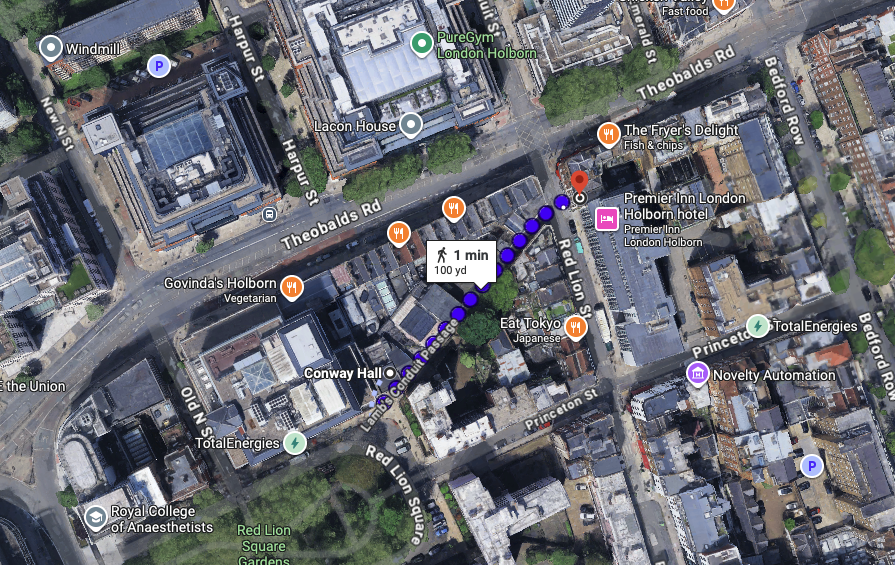
Join us at The Enterprise, Holborn for drinks on GoodCRM from 5pm. Bring your badge!